

SaaS Startups

saas idea
SaaS Startups

How a Former Microsoft Engineer Built 4 Profitable Apps Making $60,000 a Month, Without Paid Ads

How a Former Microsoft Engineer Built 4 Profitable Apps Making $60,000 a Month, Without Paid Ads A real-world guide to building and launching profitable SaaS products, indie apps, and software businesses using organic marketing, rapid validation, and lean development. Breaking Free From the 9-to-5 Grind If you’re a developer, you already know the feeling. You spend late nights and long weekends building something impressive, but the product isn’t yours. The profits belong to someone else. The company owns your work, your creativity, your output. For most people, building your own profitable software product stays just a dream, a late-night browser tab with a half-typed idea that never goes anywhere. But Jure Sotosek, a 26-year-old former Microsoft engineer, turned that dream into a $60,000/month software business. And he did it without a massive team, without venture capital, and without spending a dollar on advertising. This is not a “I woke up rich” story. It’s a step-by-step breakdown of how one developer identified real problems, built fast, marketed smart, and kept going when things were slow. Whether you want to launch your first indie app, build a profitable SaaS product, or simply start your journey toward software entrepreneurship, this guide breaks down exactly what worked, and why. The Four Products Behind $60K/Month One of the smartest things Ure did was not put everything into a single product. He built four, each targeting a different audience. Each one taught him something new about building profitable digital products. 1. Rummer — The Hardware Play ($300K in One Year) Rummer is a small plug-in device for your car’s OBD2 port that plays realistic engine sounds through your speakers. It sounds almost too simple. But that simplicity is exactly why it worked. Why it succeeded: Jure found a passionate niche, car enthusiasts who care deeply about sound and driving experience. He created short demo videos, the content went viral, and the product made $300,000 in its first year. The lesson? Niche passion communities are goldmines for product-market fit. You don’t need mass appeal, you need the right audience. 2. Parakeet AI — The Interview Prep Tool ($35,000 Last Month) Parakeet AI is an AI-powered job interview assistant that provides real-time suggestions during interviews. Last month alone, it generated $35,000 in revenue. What makes it clever is the pricing model. Instead of a traditional monthly subscription, users buy credits. They pay only when they need it, typically for a few interviews, then they stop. This credit-based SaaS pricing strategy eliminates churn guilt and aligns perfectly with how job seekers actually behave. If you’re building tools for a temporary need, usage-based pricing is almost always the right call. 3. Optibase — The Focused B2B Tool ($6,500/Month Recurring) Optibase brings A/B testing to Webflow, a popular no-code website builder used by designers and small business owners who aren’t developers. Most of them can’t build testing tools themselves, so Optibase solves a real, recurring problem for them. The beauty here is the narrow focus. Rather than competing in the crowded general A/B testing software market, Ure built exclusively for one platform. Fewer potential customers, far less competition, and a loyal user base that pays every month. Micro-SaaS strategy at its finest: smaller market, loyal customers, sustainable revenue. 4. Apply Agent — The Newest Launch ($1,000 in Two Weeks) Apply Agent is an AI-powered job application tool that automatically fills out job applications for you. Just two weeks after launch, it had already generated $1,000 in revenue. That early traction is the only signal you need to know whether an idea is worth doubling down on. It’s not about the dollar amount; it’s about proving someone will pay. https://youtu.be/KpVPST_P4W8?si=M7_y0vdYzpOzOJyU How He Got 300 Million Views Without Spending on Ads This is the part of Ure’s story that most developers ignore, and they shouldn’t. He generated over 300 million organic video views on TikTok and Instagram Reels. No ad spend. Just smart content marketing for SaaS. His content formula is deceptively simple: Hook the viewer in the first 3 seconds, make them stop scrolling Show the problem clearly before you show the solution Demonstrate the product working live, don’t just describe it End with a clear, direct call to action He also ran constant experiments. Different hooks, different angles, different endings. Videos that performed well got amplified; the rest were dropped. This iterative organic content strategy is more systematic than it looks. The Co-Founder Who Multiplied the Results Jure is honest about one thing: he’s not a natural video creator. Rather than spending months forcing himself to improve, he found a partner whose genuine strength was content creation. They split revenue. The partner handled videos; Ure handled building. Together, Rummer earned over 200 million views. Neither could have done it alone. The takeaway for solo founders: know your weaknesses, and bring in someone who turns them into strengths. Structure the deal fairly so both parties are genuinely motivated. Why He Builds Everything in Two Weeks Jure has one non-negotiable rule: if you can’t validate your idea in two weeks, you’re moving too slowly. That might sound extreme. But there’s real logic behind it. Your idea isn’t as unique as you think. Someone else has it right now. The only way to win is to ship your MVP faster, reach real users first, and start collecting feedback while your competitors are still planning. His Two-Week Launch Framework Week 1 — Build the Core: Build only the one feature that solves the core problem Cut everything else; it can come later Set up payments from day one Week 2 — Get It in Front of People: Deploy and make it live, imperfect is fine Try to get one paying customer before the two weeks are up If someone pays, you have something worth improving The goal isn’t a polished product. The goal is proof of willingness to pay. The Lean Tech Stack Behind All Four Products Jure doesn’t use exotic tools. He sticks to a lean, proven indie hacker tech stack that lets him build
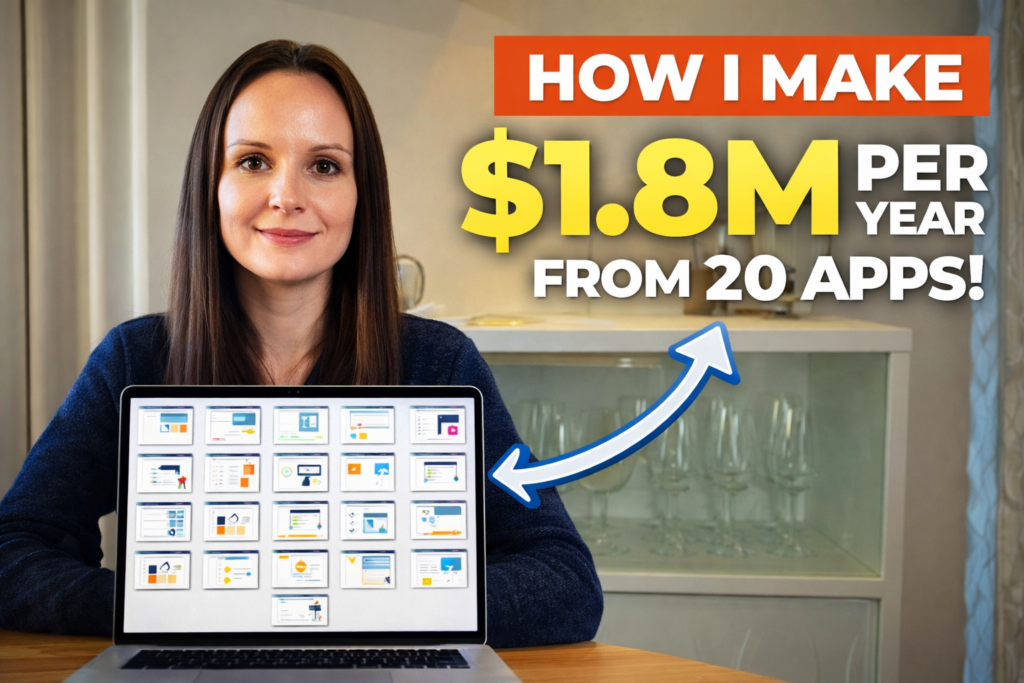
Katie Keith, founder of Barn2 Plugins, sitting at a desk with a laptop displaying 20 WordPress plugin dashboards, with text overlay reading "How I Make $1.8M Per Year From 20 Apps
SaaS Startups

How to Build a $1.8M Software Portfolio in 2026

How to Build a $1.8M Software Portfolio in 2026 Katie Keith’s Multi-App Strategy for WordPress Entrepreneurs Reading Time: ~12 minutes  |  By Barn2 Plugins Discover how Katie Keith built a $1.8M WordPress plugin portfolio with 20 products serving 90,000+ websites. This guide covers her proven multi-product strategy, organic SEO tactics, and cross-selling playbook, all without a dollar of paid advertising. Why the Multi-Product Approach Is Smarter Than You Think. Most startup advice sounds like a broken record: pick one product, go deep, ignore everything else. And for many businesses, that’s the right call. But it’s not the only path, and for Katie Keith, it wasn’t even the best one. Katie is the founder of Barn2 Plugins, a fully remote company that has quietly grown into something remarkable: 20 software products, $1.8 million in annual recurring revenue, and over 90,000 active installations across websites worldwide, all without venture capital, paid ads, or a single office. The numbers tell a compelling story: $9.8 million in lifetime sales across the portfolio  90,000+ active plugin installations worldwide $150,000 average monthly recurring revenue Consistent profitability with zero outside funding A lean remote team managing the entire operation This isn’t a story about luck or viral moments. Katie’s success is grounded in organic SEO, strategic cross-selling, and solving real problems for WordPress users. If you’re a developer, founder, or indie entrepreneur thinking about a multi-product business, this guide breaks down exactly how she built it, and how you can too. The Origin Story: One Problem, One Plugin Katie didn’t sit down one day and plan a 20-product empire. Her journey started the way most good businesses do, by noticing a gap and deciding to fill it. Product 1: WooCommerce Protected Categories Before writing a single line of code, Katie did her homework. She spent time reading through the WooCommerce ideas forum, a goldmine of real user frustrations, and started looking for a pattern. What did people keep asking for that nobody had built? Her research process was methodical: Studied the WooCommerce ideas forum to surface frequently requested features Analyzed existing plugins to map gaps in functionality Validated demand by checking search volume and forum activity Identified a high-demand feature with no real solution in the marketplace The result was a plugin that let WooCommerce store owners create password-protected or members-only product categories. Hundreds of users had asked for it. Nobody had built it yet. Katie built it. Key Takeaway: Don’t guess at product ideas. Go where your target customers are already asking for help, then give it to them. Product 2: “Post Table Pro” The Accidental Hit Her second product didn’t come from forum research. It came from client work. While building a custom solution for a client, a way to display WordPress posts in searchable, filterable tables, Katie realized this wasn’t a one-off need. Thousands of WordPress sites had exactly this problem. She polished the code, packaged it as Post Table Pro, and it became one of her best-performing plugins. Key Takeaway: Pay attention to what your clients keep asking for. Repeated requests are a signal, and your next product might already be half-built. The Portfolio Effect: Why 20 Products Beat One Big Bet Managing 20 products sounds exhausting. Most founders assume it would be 20 times the work. Katie’s experience says otherwise. How Portfolio Revenue Compounds 1. Revenue Stability Through Diversification When one plugin has a slow month, 19 others keep the revenue flowing. Algorithm changes, market shifts, and seasonal dips that would kneecap a single-product business become minor inconveniences in a diversified portfolio. 2. Customer Lifetime Value Multiplication A customer who buys one $79 plugin might buy three or four more over time. Katie’s data shows portfolio customers are worth two to four times more than single-product buyers. Cross-selling also keeps customers engaged longer, reducing churn in the process. 3. Shared Infrastructure Lowers Costs One support team serves all 20 products. One marketing website drives traffic to the entire portfolio. Development frameworks and code libraries get reused across products. The marginal cost of adding a new product keeps dropping as the infrastructure matures. 4. Built-In Launch Advantage When Katie launches a new plugin today, she’s announcing it to tens of thousands of existing customers. Her email list, SEO domain authority, and social proof are already in place. New products don’t start from zero anymore. The Growth Timeline Edit Year Revenue What is the difference Year 1 $50k 1 product — learning the market Year 2 & 3 $180k 3 products — existing customers bought new releases Year 4 $400k 6 products — cross-selling effect kicking in Year 5 $950k 12 products — portfolio compounding at scale Now $1.8M 20 products — full portfolio flywheel in motion Finding Product Ideas: 3 Sources That Never Run Dry After 20 products, Katie has refined her ideation process down to three reliable sources. None of them requires a flash of genius, they’re all about paying attention. Source 1: Community Forums and Feature Requests Where to look: WooCommerce Ideas Board, the official feature request forum org Support Forums, look for recurring questions with no clean answers Reddit communities: r/WordPress, r/WooCommerce, r/Shopify Facebook Groups for WordPress developers and site owners What signals a genuine opportunity: Requests with 50 or more upvotes or comments People solving problems with messy code snippets (means no plugin exists yet) Features that premium themes advertise but consistently under-deliver Real Example: WooCommerce Protected Categories came directly from a forum request that had 200+ upvotes. There was no plugin for it. Katie built one. Source 2: Client Projects Client work is underrated as a product incubator. When you’re building custom features for paying clients, you’re also getting paid to validate product ideas. The process Katie recommends: Take on selective client work in your ecosystem (WordPress, Shopify, etc.) When building custom features, ask: ‘Would 100+ other sites need exactly this?’ If yes, generalize the solution and package it as a plugin Use the original client as a case study for marketing Real Example: Post Table Pro

chatbase success story
SaaS Startups

He Had 16 Twitter Followers. Then He Built a $6.8 Million Business in under 4 Months.

He Had 16 Twitter Followers. Then He Built a $6.8 Million Business in under 4 Months. The Chatbase story nobody tells you, the real tactics, the honest mistakes, and what founders can actually steal from it. Something about this story nagged at me the first time I heard it. Yasser, the guy who runs Chatbase, had 16 followers when he sent out the tweet that changed his life. Not 16,000. Not a respectable 160. Sixteen. Maybe a few bots in there, to be honest. And from this threadbare following, he sent out a 20-second screen recording that went utterly nuclear on the internet. My initial take? Skepticism. Pure, honed skepticism. The whole thing reeked of a LinkedIn fairy tale: one tweet, viral success, million dollars, roll credits. Too tidy. Too Hollywood. The sort of legend that gets passed around startup Twitter until everyone’s equally bored and inspired by it. But the more I learned about how Chatbase actually did end up growing, the more I realized: the tweet wasn’t the legend. It was merely the sparkler. What Yasser did in the next 117 days is where the real story begins. Wait, What Even Is Chatbase? Bare bones: you give it your documents, your PDFs, your website copy, whatever is in that head of yours or on your hard drive, and Chatbase turns it into a working chatbot. No code. No engineering staff. Upload, set up, done. It all sounds very ordinary until you recall what life was like in early 2023. Businesses were almost rabid for ChatGPT. Everybody wanted AI integrated into their products. Everybody wanted their own version of the magic. But to build something custom? That meant either a healthy budget for machine learning engineers or a co-founder who lived and breathed model documentation. Chances are, most small businesses and solo entrepreneurs didn’t have either. Yasser saw the gap and walked right through it. He built the bridge, the one that allowed marketers, small business owners, and scrappy solo entrepreneurs to actually get their hands on this stuff without needing a PhD or a $6,000 engineering price tag. Timing is not everything in the startup world, but it is closer to everything than most people are willing to admit. He was not just creating a good product. He was creating the right product at exactly the right time when the market had gotten hungry enough to pay for it. The Tweet, Actually Dissected This is what I keep coming back to about Yasser’s first viral moment: it wasn’t dumb luck, but it wasn’t some super-elaborate growth hack either. It was three simple choices layered on top of each other with a level of discipline that is uncommon. The first was making it look familiar. The demo copied the ChatGPT streaming text response, that typewriter look where the words appear one by one as the model thinks out loud. By early 2023, that look had already seared itself into the public’s retinas. The moment people saw it, the recognition trigger just clicked automatically. No translation necessary. That’s not an insignificant point. When a viewer has to expend cognitive effort just to understand what your product does in the first place, they’re already halfway out the door. Yasser removed that hurdle completely. The design aesthetic was clearly something people had already decided to trust. The second was the power of restraint. The entire demo took less than 20 seconds. Most founders would have stretched it out to three minutes, explaining the background, the pricing details, three different use cases, and a slide about the roadmap. Yasser showed the one thing that mattered, and then stopped. This, of course, is the obvious thing in retrospect. But observe how many product demos are five minutes longer than they need to be. Restraint is actually difficult when you’re as proud of what you’ve made as most founders are. The third was the amplification of borrowed influence. This is the part that doesn’t get talked about very often. Yasser included Langchain and Pinecone in his post, the infrastructure tools he’d used to build Chatbase. These companies shared his post with their own followers, who numbered in the tens of millions, an order of magnitude difference from Yasser’s 16 followers. Why did they retweet it? Because he hadn’t asked for a favor, he’d given them something they actually wanted: a real-world demo of their tech doing something cool. That’s leverage, not luck. You don’t build an audience overnight from scratch, you borrow one from someone who has a real reason to lend it to you. After the Tweet: The 117 Days That Actually Built the Business Viral is a lottery ticket. Scratch it, cash the prize, and then stand around wondering why your bank account is empty six months later. A viral moment doesn’t build a business, it just gives you a room full of people and a microphone. What Yasser did with the microphone after that is the real lesson plan. He gave every feature the full product launch treatment. Most software companies release updates under the radar. A line in the changelog, maybe a quick tweet, and then back to work. Yasser did the opposite – every significant improvement got the full product launch treatment: new demo video, new social media posts, the whole shebang. This is just exhausting because, well, it is. But the reasoning is sound, and it applies perfectly: every single day, some people have never heard of Chatbase. To them, an announcement about a feature is not an update; it’s an introduction. If you’re going to make a first impression, you might as well make it count. It also meant that Chatbase never went dark. Being visible, and not in a way that relies on a random spike, is much, much harder than people think.  He went full-on weird on Reddit, and it worked. Yasser just started slipping into book communities on Reddit and leaving free AI chatbots trained on a specific popular book. Someone in the thread

Scroll to Top