
He Had 16 Twitter Followers. Then He Built a $6.8 Million Business in under 4 Months.
The Chatbase story nobody tells you, the real tactics, the honest mistakes, and what founders can actually steal from it.
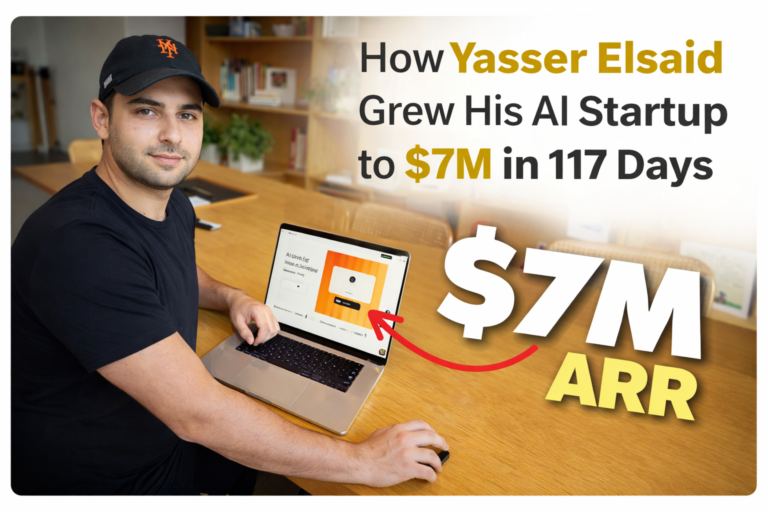
Something about this story nagged at me the first time I heard it.
Yasser, the guy who runs Chatbase, had 16 followers when he sent out the tweet that changed his life. Not 16,000. Not a respectable 160. Sixteen. Maybe a few bots in there, to be honest. And from this threadbare following, he sent out a 20-second screen recording that went utterly nuclear on the internet.
My initial take? Skepticism. Pure, honed skepticism. The whole thing reeked of a LinkedIn fairy tale: one tweet, viral success, million dollars, roll credits. Too tidy. Too Hollywood. The sort of legend that gets passed around startup Twitter until everyone’s equally bored and inspired by it.
But the more I learned about how Chatbase actually did end up growing, the more I realized: the tweet wasn’t the legend. It was merely the sparkler. What Yasser did in the next 117 days is where the real story begins.
Wait, What Even Is Chatbase?
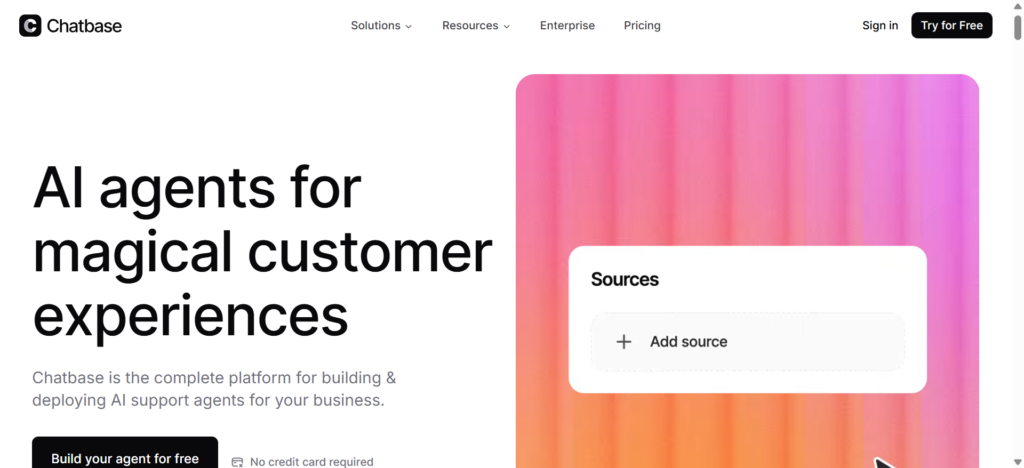
Bare bones: you give it your documents, your PDFs, your website copy, whatever is in that head of yours or on your hard drive, and Chatbase turns it into a working chatbot. No code. No engineering staff. Upload, set up, done.
It all sounds very ordinary until you recall what life was like in early 2023. Businesses were almost rabid for ChatGPT. Everybody wanted AI integrated into their products. Everybody wanted their own version of the magic. But to build something custom? That meant either a healthy budget for machine learning engineers or a co-founder who lived and breathed model documentation. Chances are, most small businesses and solo entrepreneurs didn’t have either.
Yasser saw the gap and walked right through it. He built the bridge, the one that allowed marketers, small business owners, and scrappy solo entrepreneurs to actually get their hands on this stuff without needing a PhD or a $6,000 engineering price tag.
Timing is not everything in the startup world, but it is closer to everything than most people are willing to admit. He was not just creating a good product. He was creating the right product at exactly the right time when the market had gotten hungry enough to pay for it.
The Tweet, Actually Dissected
This is what I keep coming back to about Yasser’s first viral moment: it wasn’t dumb luck, but it wasn’t some super-elaborate growth hack either. It was three simple choices layered on top of each other with a level of discipline that is uncommon.
The first was making it look familiar. The demo copied the ChatGPT streaming text response, that typewriter look where the words appear one by one as the model thinks out loud. By early 2023, that look had already seared itself into the public’s retinas. The moment people saw it, the recognition trigger just clicked automatically. No translation necessary.
That’s not an insignificant point. When a viewer has to expend cognitive effort just to understand what your product does in the first place, they’re already halfway out the door. Yasser removed that hurdle completely. The design aesthetic was clearly something people had already decided to trust.
The second was the power of restraint. The entire demo took less than 20 seconds. Most founders would have stretched it out to three minutes, explaining the background, the pricing details, three different use cases, and a slide about the roadmap. Yasser showed the one thing that mattered, and then stopped.
This, of course, is the obvious thing in retrospect. But observe how many product demos are five minutes longer than they need to be. Restraint is actually difficult when you’re as proud of what you’ve made as most founders are.
The third was the amplification of borrowed influence. This is the part that doesn’t get talked about very often. Yasser included Langchain and Pinecone in his post, the infrastructure tools he’d used to build Chatbase. These companies shared his post with their own followers, who numbered in the tens of millions, an order of magnitude difference from Yasser’s 16 followers.
Why did they retweet it? Because he hadn’t asked for a favor, he’d given them something they actually wanted: a real-world demo of their tech doing something cool. That’s leverage, not luck. You don’t build an audience overnight from scratch, you borrow one from someone who has a real reason to lend it to you.
After the Tweet: The 117 Days That Actually Built the Business
Viral is a lottery ticket. Scratch it, cash the prize, and then stand around wondering why your bank account is empty six months later. A viral moment doesn’t build a business, it just gives you a room full of people and a microphone.
What Yasser did with the microphone after that is the real lesson plan.
He gave every feature the full product launch treatment. Most software companies release updates under the radar. A line in the changelog, maybe a quick tweet, and then back to work. Yasser did the opposite – every significant improvement got the full product launch treatment: new demo video, new social media posts, the whole shebang.
This is just exhausting because, well, it is. But the reasoning is sound, and it applies perfectly: every single day, some people have never heard of Chatbase. To them, an announcement about a feature is not an update; it’s an introduction. If you’re going to make a first impression, you might as well make it count.
It also meant that Chatbase never went dark. Being visible, and not in a way that relies on a random spike, is much, much harder than people think.
He went full-on weird on Reddit, and it worked. Yasser just started slipping into book communities on Reddit and leaving free AI chatbots trained on a specific popular book. Someone in the thread says they love Atomic Habits? Well, here’s a chatbot you can actually have a conversation with about it. No pitch. No sign-up wall. Just a thing that worked.
He invested real money in API fees to make these bots truly great. The communities rewarded him with exactly the kind of viral, word-of-mouth buzz that no amount of ad spend can buy. People shared these bots because they wanted to, not because a notification reminded them to.
The idea of free tools as user acquisition isn’t new. What made this iteration work is the part that most founders would skip: he created things that were worth sharing in and of themselves. The half-hearted freemium model of “free but kinda annoying” or “useful but secretly broken” doesn’t spread. This did.
The Paul Graham and Naval bots are worth mentioning separately. He created AI chatbots that learned from the writing of famous thinkers, such as Paul Graham, Naval Ravikant, and others. These weren’t marketing stunts. These were actually interesting products in and of themselves.
And every individual who nosed around one and thought, “Huh, I want to build something like this,” they landed on Chatbase’s landing page. The bots were both a product and a funnel, and the intersection of those two was almost seamless. That’s beautiful. That’s the kind of marketing that doesn’t feel like marketing because, in fact, it isn’t.
When the organic slowed down, he paid, but strategically. Organic growth doesn’t go on forever without a boost. Between launches, when the initial excitement had begun to wear off, Yasser invested in sponsored posts on specific LinkedIn profiles. One campaign brought in $4,000 in one day.
The key element: those posts didn’t feel like advertisements. They were teaching. They offered something to consider even if the reader never clicked through. That shifts the entire paradigm of how the audience will interact with them.
The Business Model: Selling Without a Sales Team
This is what the SaaS industry means by product-led growth, which is a fancy way of saying the product sells itself. No discovery call to book. No demo to request three weeks in advance. No account manager playing email ping-pong with your procurement team.
You show up to the page, understand exactly what it does, give it a try, find something that passes for value, and pay. That’s the whole funnel, and it all fits on a napkin.
The tech stack is lean and mean: Stripe for payments, Supabase handling the database, Vercel for hosting, and an AI layer that leverages OpenAI, Anthropic, Google Gemini, and Grok, depending on what each individual actually needs. A small company serving hundreds of thousands of customers, without it degenerating into a logistical nightmare.
Not one bit of this is happenstance. It multiplies quietly over time: every hour not spent on manual onboarding is an hour spent making the product less likely to need manual onboarding.
The Stuff Yasser Got Right That Most Founders Get Wrong
He started building before the API was public. Yasser was well into building Chatbase before the OpenAI ChatGPT API was released to the public. By the time it was, he had something up and running. His competition was still whiteboarding ideas.
The takeaway here is well beyond the world of AI: the best time to build is just slightly before it’s safe to do so. Not stupidly early, not in the dark ages before anyone has running water. But early enough that when the market opens up, you’re not trying to catch a bus that’s already left the station.
He filtered advice instead of hoarding it. The startup internet is a drowning sea of advice. Some of it is good, most of it is contradictory, and almost all of it is out of context. Yasser’s been very clear about this: he listens widely, but filters everything through what he knows about his market and his actual customers.
Founders get nudged towards pivots, features, and growth plans that don’t apply to their exact situation, because “it worked for so-and-so, who has a ton of Twitter followers.” Those two scenarios are never, ever comparable. Yasser understood this and stuck to his guns.
His ambition scaled with his company. His initial vision was $10k a month and the ability to telecommute from Bali. That’s not a bad vision, honestly, that’s a good one. But as Chatbase found its rhythm, he realized he was aiming too low. Now he’s shooting for $100 million ARR, and still bootstrapped.
This is a moment to pause and reflect on. Many early-stage founders top out on their thinking too soon. You set a low bar, reach it, and then cruise on the momentum. Yasser’s ability to keep raising his own bar, to avoid the comfortable stop, is one of the reasons the company kept moving.
He launched before it was ready. “Launch early” is one of those catchphrases that gets thrown around so often that it becomes meaningless. Yasser actually lived this way; he put out things that weren’t finished, saw how real users reacted to them in real-world conditions, and then corrected what needed to be corrected based on that feedback, rather than what he thought he knew.
There isn’t an internal testing environment that can replicate what happens when a real human encounters a real bug while trying to do something they care about. That information is priceless. The sooner you get it, the sooner you can build something people will continue to pay for.
Why No VC Money Was Actually an Advantage
This is the part of the story that gets the least attention, and it’s a shame, because it may be the most informative.
Bootstrapping meant Yasser retained complete control over product direction, over the pace of hiring, and over what to build next. No board meetings devouring the calendar. No investor pressure to meet growth metrics that would have made no sense for where the company actually was. No one was telling him to hire aggressively before the unit economics supported the headcount.
It also meant the guerrilla playbook, the Reddit campaigns, the influencer bots, the scrappy sponsored posts, wasn’t a plan B for when the real budget ran dry. It was the plan. And it outperformed a lot of the expensive traditional marketing it could have replaced.
Having your back against the wall can be a powerful catalyst for creativity in ways that are difficult to replicate with a full wallet. When you can’t simply throw money at a problem, you have to think harder and more specifically about it. Some of the most successful growth hacks at Chatbase directly resulted from Yasser having no easy out.
What You Can Actually Take From This
Not all founders are going to surf a wave in the same way that Yasser did. The particular circumstances were particular. But the patterns underlying them? Those move.
Look for the technologies that are making the transition from only available to experts to available to anyone. That window, when a complicated technology starts to become available to mere mortals, is where the most interesting companies are born. APIs opening up, no-code tools advancing, regulatory changes: these are real opportunities that didn’t exist last year.
Be able to demonstrate your core value in under 30 seconds. Not as a party trick, but as actual proof of clarity. If you can’t show someone in that window what your product does, it’s probably a sign that you haven’t figured out what actually matters about it yet.
Borrow audiences before you build your own. Who already has the attention of your target audience? What do you have that they might want and that they could share with others? Yasser’s tagging philosophy and his free community tools were both expressions of the same impulse.
Every significant feature is a launch. Your next customer hasn’t seen anything you’ve built. For them, every significant update is a first impression; treat it that way.
And perhaps the most painful lesson of all: launch before you’re comfortable launching. The feedback you get from real users in the first week is worth more than months of internal development could ever hope to provide. The pain of shipping something that isn’t quite right is almost always the price of admission for something that actually does work.
The Bigger Picture
Chatbase is at the nexus of a number of things that are simply true about where the state of technology is today. The AI infrastructure has gotten cheap and accessible enough that a solo founder can build something compelling without a huge team. The need for “practical” AI—software that does something actually useful for a real business, as opposed to demos that are impressive at conferences but not actually useful, is real, growing, and underserved. And users are increasingly eager to touch software before they’ll pay for it, which is exactly what Chatbase did.
The generic AI product space is getting crowded quickly. The area that is still wide open is specificity, tools for a particular workflow, a particular industry, a particular type of problem that a real human has on a Tuesday afternoon. That’s where Chatbase is. It’s probably where the next interesting AI companies will emerge, too.
So here’s the question worth sitting with: what’s the wave forming right now, before most people can see it clearly? And are you already building?
Sources: From Yasser’s interview with Pat Walls on Starter Story.